Traditional Kitchen Design: What Defines the Style and How to Plan One
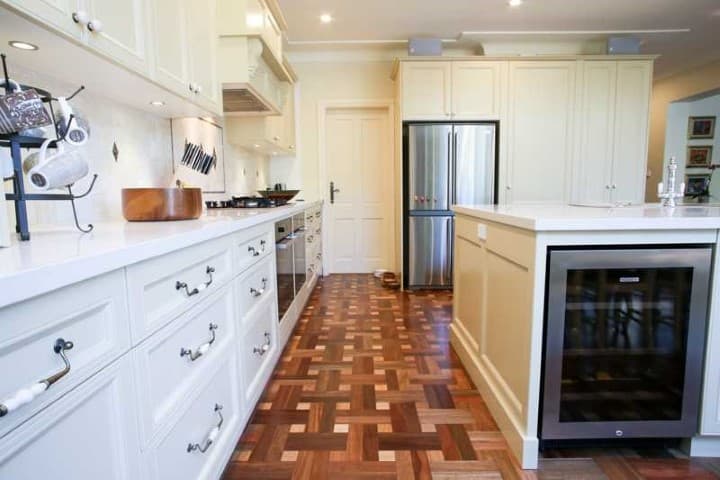
Plenty of people know they want a traditional kitchen long before they can say why. It might be a farmhouse kitchen from a holiday, a grandparent’s Federation home, or a photo saved years ago. What links them is detail: panelled doors, warm timber, and a room that looks lived in.
Pinning the style down is harder, because traditional kitchen design overlaps with classic, country, and Hamptons kitchens. Whether a traditional kitchen feels timeless or dated usually comes down to a handful of choices.
What Is a Traditional Kitchen?

The style has its roots in older European and Australian homes, where the kitchen was built by joiners and furnished much like the dining room next door. That is still what a traditional kitchen renovation aims for, with panelled doors, mouldings, and natural materials that wear in instead of wearing out.
Whether you are reworking an old room or planning a new kitchen from scratch, good traditional kitchen design is about how the pieces sit together. Picture a rangehood framed like a chimney breast, glass-fronted cabinets either side of a window, or an island that could pass for a farmhouse table.
The colours are soft and warm. Think creams and warm whites, sage greens, or a deep navy, set against timber, brass, or stone.
The Features That Define the Style
You do not need every feature in the book to get the look. Two or three, done properly, will do more than a kitchen crowded with detail.
Cabinetry and Doors
Most of the character in traditional kitchen cabinets comes from the doors. Shaker doors, with their flat centre panel and simple frame, look right in almost any home. Raised-panel doors go a step further with more depth and a more formal feel, while simpler classic kitchen designs tend to stay with shaker doors.
Cornices, decorative end panels, and glass-fronted upper cabinets build on the effect. Open shelves and plate racks belong here too, as long as you use them sparingly. A short run of open shelving gives everyday plates and bowls somewhere to sit on show.
Benchtops and Splashbacks
Stone and timber are the natural partners for traditional cabinetry. A pale, veined stone keeps a kitchen feeling light, while a timber top on the island adds a warmth that stone cannot. Both need sealing from time to time, so decide how much upkeep you are happy with before you fall for a particular slab.
Splashbacks are where you can have a little fun. Subway tiles are the safe choice, handmade-look ceramics add texture, and a patterned panel behind the cooktop gives the room a focal point.
Layout and Symmetry
Traditional kitchens are usually planned around one focal point, whether that is the cooktop, a window over the sink, or the island. Cabinets tend to be set out in matching pairs either side of it. That symmetry is what keeps a detailed room feeling calm instead of busy.
Hardware and Lighting
Hardware is the jewellery of a traditional kitchen. Cup pulls, round knobs, and latches in brass, bronze, or brushed nickel finish the cabinetry. Pendants over the island and wall lights beside a window keep the light soft in the evening.
Traditional, Classic, Country and Hamptons: How They Differ

If you have ever wondered where traditional ends and Hamptons begins, you are not alone. The names get used loosely, but the differences come down to formality, colour, and how much decoration is involved:
- Traditional. Detailed, symmetrical, and furniture-like, with panelled doors, mouldings, and warm materials.
- Classic. A more restrained take that keeps the timeless shapes but simplifies the detail, so it sits comfortably in newer homes.
- Country. Timber, open shelving, and a farmhouse sink are the hallmarks of a relaxed country kitchen style, which is happy to look a little worn.
- Hamptons. Light and coastal, white Hamptons-style kitchens usually pair shaker doors with panelled detail and soft grey accents.
- French Provincial. The most ornate of the group, with curved details, decorative mouldings, and aged finishes.
Most real kitchens borrow from more than one. A traditional layout in Hamptons colours, or classic cabinetry with a few country timber shelves, works well as long as the details agree with each other.
Making Traditional Kitchen Design Work in a Modern Home
Choosing a traditional look does not mean putting up with an old-fashioned kitchen. The fridge, dishwasher, and rangehood can all sit behind panels that match the cabinet doors, so the only thing on show is the cabinetry.
An island is the easiest way to bring the style up to date. Give it turned legs or panelled ends and it reads like a piece of furniture. It still gives you bench space and somewhere for the kids to do homework. Inside the cabinets, modern drawer systems and pull-out pantries do the work a period kitchen never could.
If you like the look but not the weight of it, keep the shapes and pare back the detail. Shaker doors in a soft colour, a plain stone benchtop, and fewer mouldings give you the character without the room feeling heavy.
Choosing Materials for a Traditional Kitchen
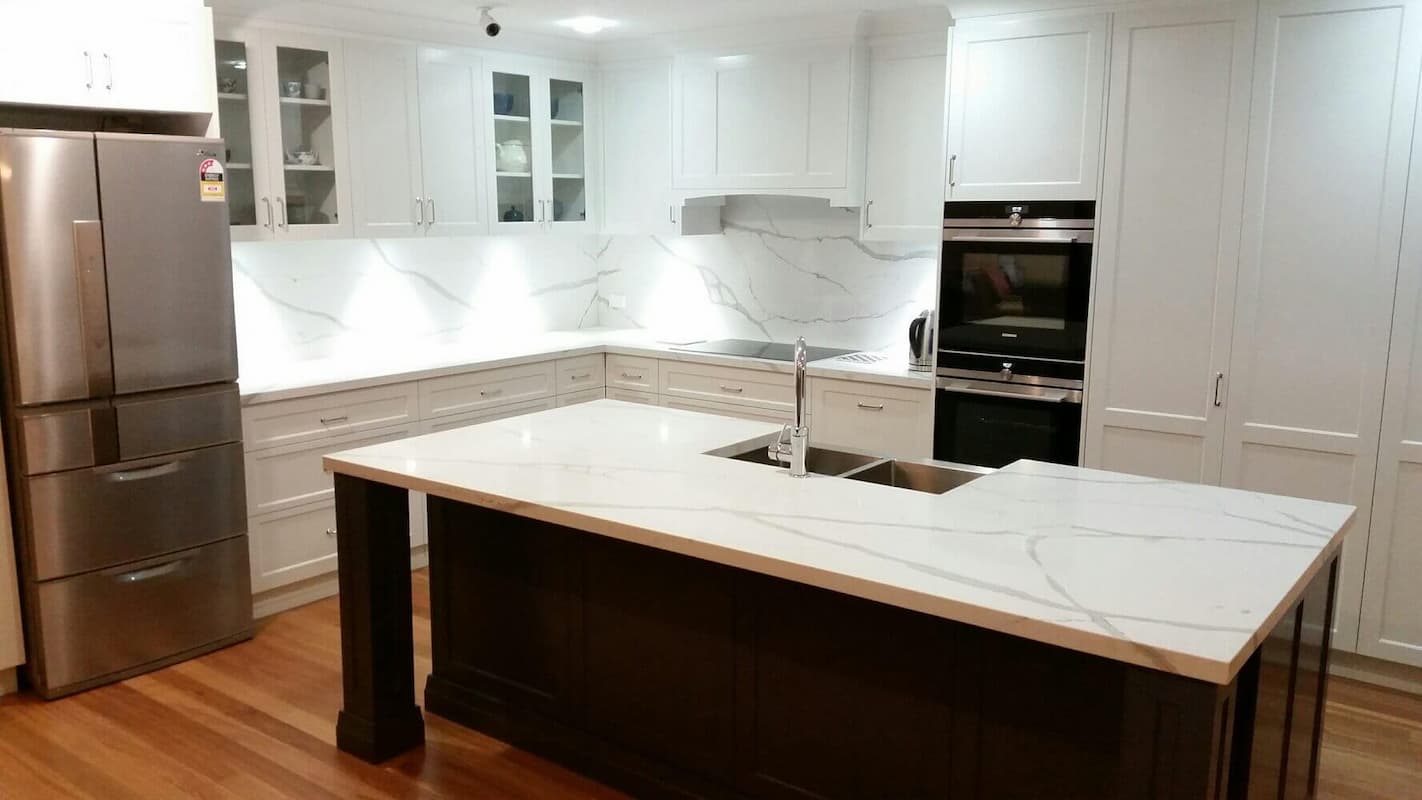
The door finish decides how traditional a kitchen feels more than anything else. It pays to see door and benchtop samples in person, because a palm-sized sample rarely tells you how a full wall of doors will look. The main options are:
- Polyurethane shaker doors. Sprayed in the colour of your choice, in satin or gloss, and a favourite for traditional, Hamptons, and country kitchens.
- Hand-painted doors. You can see the brushstrokes, and that is the point. The matt finish suits heritage-style kitchens and sits naturally in ornate French Provincial kitchens with columns and corbels.
- Timber veneer. An engineered timber panel with the warmth of real wood and more consistency than solid timber.
- Stone or timber benchtops. Stone copes well with a busy cooking zone, and timber brings warmth to an island or breakfast bar.
Ask how each surface needs to be looked after before you decide. Painted and timber finishes can show wear sooner than some modern surfaces, and plenty of owners decide that is part of the charm.
Traditional Kitchens in Sydney Homes
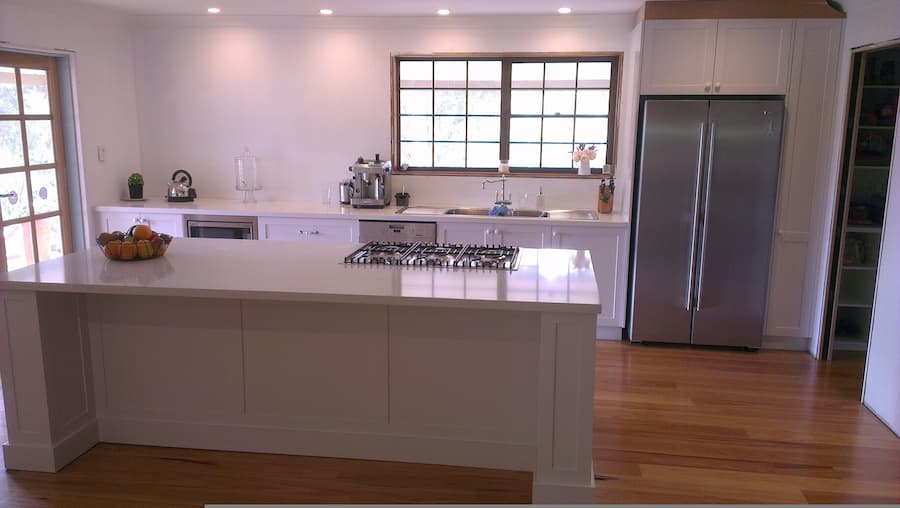
Sydney has no shortage of houses that suit a traditional kitchen. Victorian terraces in the inner suburbs, Federation homes across the North Shore and Inner West, and Inter-war bungalows are all good examples. Many already have the cornices, high ceilings, and timber floors for a new kitchen to pick up on.
In older homes, the kitchen often sits in a later rear extension. A good kitchen renovation carries the original cornices, skirting, or door profiles through, so the new kitchen feels as though it was always there. Walls are rarely square, so made-to-measure cabinetry sits better than standard units.
Newer homes can carry the style too, as long as the scale suits the room. Keep the detail focused on the kitchen itself so it does not fight the rest of the house.
How KitchenKraft Approaches Traditional Kitchens
KitchenKraft has been designing and building kitchens across Sydney since 1963, with more than 16,000 completed. Traditional kitchens live or die on detail. Every door, panel, and cornice is made in-house in Ryde on German CNC machinery, with BLUM hardware fitted as standard.
Each project starts with a 3D design, so you can see how the doors, colours, and proportions sit together long before anything is made. Our cabinetry is sized to the room, right up to the cornice line. You can book a free design consultation in Ryde to see door profiles and finishes in person.
Planning Your Traditional Kitchen
The best traditional kitchen design starts with the cabinetry. Choose the door style first, then build the benchtops, hardware, and lighting around it, and the room will hang together.
Gather photos of kitchens you love. Jot down what draws you to each one, whether it is a colour, a door, or simply the feel of the room. Take them into a design consultation, and ask to see the kitchen in 3D before anything is signed off.
Be honest about how you use the kitchen, too. Deep drawers, a generous pantry, and room to work between the sink and cooktop matter as much as any moulding. If the budget is tight, spend on the detail people see first, like the island and the rangehood, and keep the rest simple.
Traditional Kitchen FAQs
Is a traditional kitchen the same as a classic kitchen?
They are close cousins, but a classic kitchen is usually the quieter, more restrained version. Traditional kitchens carry more detail, such as raised panels, mouldings, and decorative end panels.
Are traditional kitchens going out of style?
Traditional kitchens have outlasted plenty of trends because they rely on proportion and natural materials. Lighter colours and simpler detailing keep the style feeling fresh.
What benchtop suits a traditional kitchen?
Stone and timber are the usual choices, and many kitchens use both. Stone around the perimeter with a timber top on the island gives you a hard-wearing workspace and a warm centrepiece.
Can a small kitchen be traditional?
A small kitchen can carry the style well if the detail is kept in proportion. Lighter colours, glass-fronted upper cabinets, and a couple of open shelves add character without crowding the room.
Are shaker doors traditional or modern?
Shaker doors suit both, which is why you see them everywhere. In a traditional kitchen they sit alongside mouldings and brass hardware, while a modern kitchen pairs them with slim handles and plainer benchtops.